
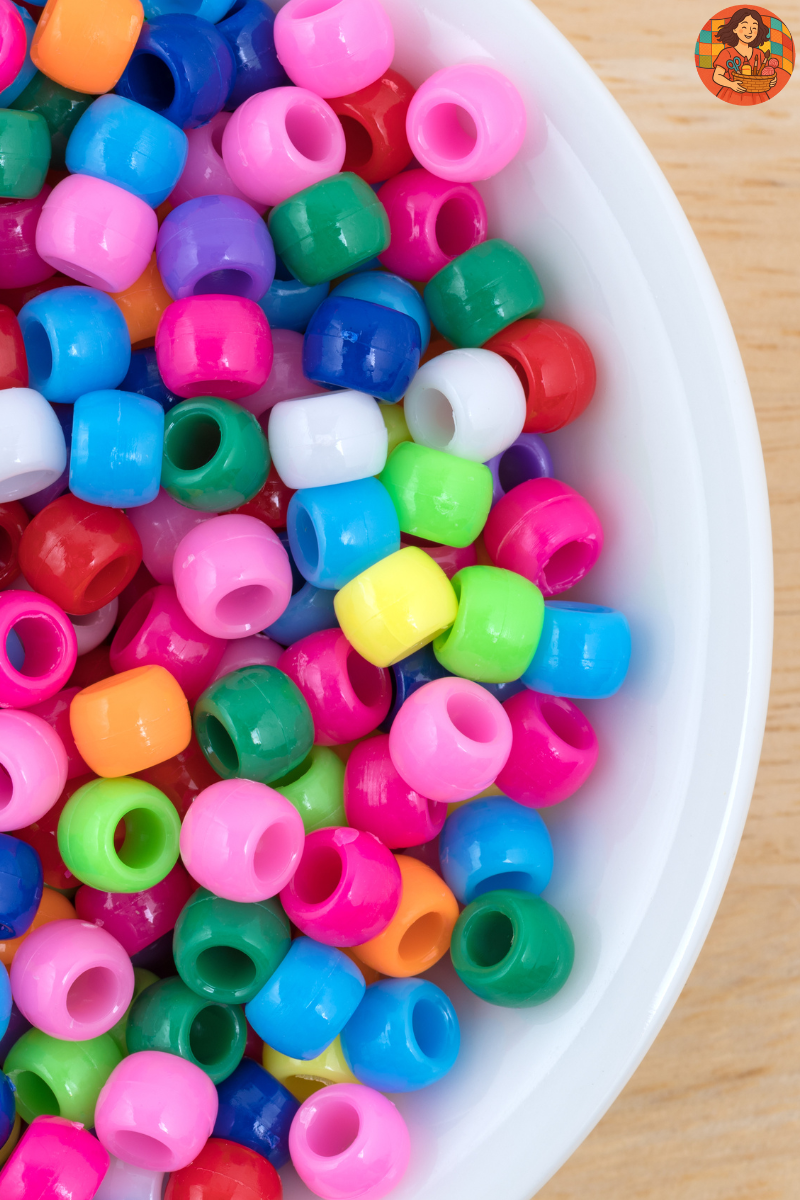

Every wondered about the history of pony beads? Pony beads are instantly recognizable: small, round plastic beads with a wide hole, available in every color of the rainbow. For many of us, they’re tied to childhood memories of summer camps, craft tables, and making friendship keychains with friends. But the story of pony beads stretches far beyond playgrounds and lanyard kits. It’s one that weaves together trade history, cultural exchange, and the enduring joy of crafting.
In this post, we’ll take a deep dive into the history of pony beads: where they came from, how they became so widespread, and why they’re still a beloved staple in craft projects today.
What Exactly Are Pony Beads?
Before we step back in time, let’s define what pony beads are. Traditionally, a pony bead is a small, cylindrical or barrel-shaped bead with a large hole in the center, typically measuring 6×9 mm. Today, they’re usually made of plastic and come in opaque, transparent, pearlized, neon, glitter, and glow-in-the-dark varieties.

Their large holes make them easy to string onto cord, yarn, or pipe cleaners, making them a go-to bead for children’s crafts, jewelry, and keychain designs. But pony beads weren’t always plastic, and they weren’t always associated with kids’ crafts. They have a surprisingly deep and complex history.
The History of Pony Beads
The term pony bead is believed to have originated in the mid-1800s, during a time when glass beads were commonly traded in North America. These beads were manufactured primarily in Europe, especially Venice and later Bohemia (modern-day Czech Republic), and brought overseas through trade routes.
But why the name pony bead? There are two main theories:
- Pony express connection: Some historians suggest that the beads got their name because they were transported by the Pony Express and other mail carriers who relied on ponies to move goods across the American frontier.
- Pony trade connection: Others believe the name came from the fact that Native American traders often received these beads in exchange for ponies (horses). Beads, after all, were a major part of trade goods exchanged between European settlers and Native peoples.

Either way, by the 1800s, “pony beads” referred to medium-sized glass beads that were smaller than the large “crow beads” but larger than seed beads.
Pony Beads in Native American Culture
For Indigenous communities, beads were far more than decoration. They carried cultural, spiritual, and social significance. Pony beads, with their size and versatility, were widely adopted by Native American artisans during the 19th century.
- Regalia and clothing: Pony beads were used to decorate moccasins, belts, and dresses. Their larger size meant they were more visible on garments and accessories, creating bold, striking patterns.
- Symbolism: Colors often held symbolic meaning, representing elements of nature, tribal identity, or spiritual beliefs.
- Trade value: Pony beads were highly valued in trade, serving as both currency and ornamentation.
Over time, as smaller seed beads became more readily available, pony beads were used less frequently in intricate beadwork. Still, their role in history and their lasting impact on bead artistry cannot be overstated.
The Shift to Plastic Pony Beads
By the mid-20th century, pony beads underwent a transformation. Advances in plastics manufacturing made it possible to produce beads inexpensively, quickly, and in bright, durable colors. The new plastic pony beads were lighter than their glass counterparts and safe for children to use.
This change made pony beads more accessible than ever. No longer restricted to trade or specialty beadwork, they became a staple in classrooms, scout groups, and craft stores. Parents loved them because they were affordable and easy to clean up, while kids loved them for their bright colors and the endless possibilities they offered.
Plastic pony beads also fit perfectly into the DIY spirit of the 1960s and 70s, when handmade crafts and self-expression were in high demand.

Pony Beads and the Rise of Craft Culture
From the 1970s through the 1990s, pony beads surged in popularity. They became almost synonymous with childhood crafting in the U.S. and beyond.
Some of the most iconic uses included:
- Beaded keychains and animals: Pony bead lizards, turtles, and other small animals became camp classics, often clipped onto backpacks or keyrings.
- Jewelry making: Kids and teens strung pony beads into necklaces, chokers, and bracelets, often pairing them with letter beads to spell out names or messages.
- Hair accessories: Pony beads were frequently threaded into braids, particularly in African American hair styling, adding colorful, jingling accents.
- Classroom crafts: Teachers relied on pony beads for projects that helped kids practice patterns, colors, and fine motor skills.
Their durability and bright aesthetic made them perfect for group settings where supplies needed to be shared and mistakes were part of the learning process.
Pony Beads in the Kandi Movement
The history of pony beads continued to evolve in the late 1990s and early 2000s when pony beads took on a whole new cultural meaning through the rave and EDM (electronic dance music) communities. Known as kandi beads, these colorful plastic beads were strung into wide bracelets, necklaces, and cuffs.
“Kandi kids” would trade these beaded accessories at concerts and festivals, following the mantra of PLUR: Peace, Love, Unity, Respect. Each bracelet represented a connection between people, often exchanged during a handshake ritual.
The affordability of pony beads made them the perfect medium for kandi jewelry, which is still a strong tradition at music festivals today. In this context, pony beads represent friendship, community, and creative expression.
Why Pony Beads Are Still Popular Today
Given the history of pony beads, you might think pony beads would have faded away with other childhood trends but they’re as popular as ever. Here’s why they continue to endure:
- Accessibility: Pony beads are affordable and widely available at craft stores, online retailers, and even big-box stores.
- Ease of use: Their large holes make them beginner-friendly, perfect for kids, but also versatile enough for adults.
- Versatility: They’re used in jewelry, bag charms, hair accessories, home décor, and festival wear.
- Nostalgia factor: For adults, pony beads often spark fond childhood memories, inspiring them to revisit the craft or introduce it to their children.
- Community: From Indigenous beadwork to rave kandi to online crafting groups, pony beads continue to be a symbol of connection across cultures and generations.

The Future of Pony Beads
As crafting trends evolve, pony beads continue to adapt. Today, you can find them in eco-friendly materials, glow-in-the-dark finishes, and unique shapes like stars and hearts. Social media platforms like TikTok and Instagram have given rise to a new generation of pony bead crafters who share tutorials, showcase original designs, and inspire others to pick up the hobby.
DIY culture is thriving, and pony beads fit perfectly into the movement toward accessible, affordable, and creative projects. Whether it’s a parent looking for a rainy-day activity with kids, a festival-goer making kandi cuffs, or a crafter designing whimsical bag charms, pony beads remain as relevant as ever.


